
Beyond the Old Armor: Redefining Manhood for a World That Has Changed
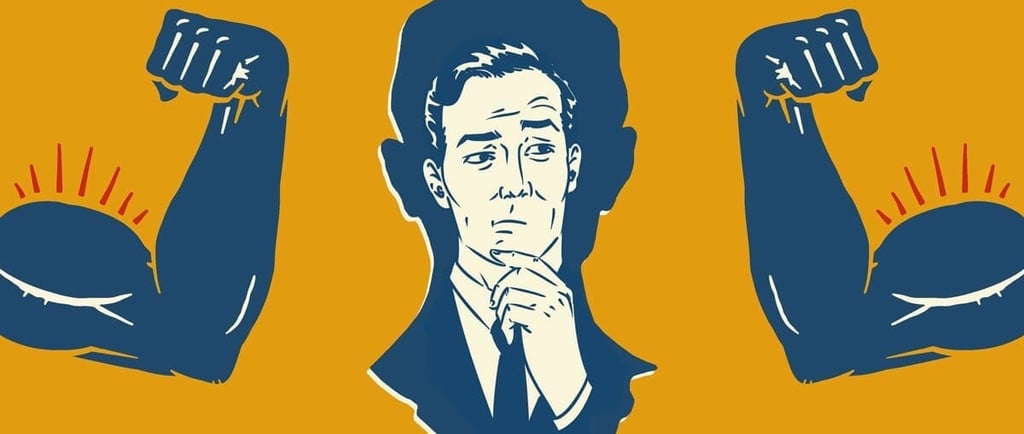
For centuries, male identity has been shaped by a narrow mold—one forged in times of survival, conquest, and hierarchy. Strength meant endurance. Leadership meant dominance. Emotion meant liability. That mold once served a purpose in a harsher world. But the world has changed, and men have changed with it. What hasn’t changed fast enough is the expectation that men should still fit into a shape they have already outgrown.
Beyond the Old Armor: Redefining Manhood for a World That Has Changed
For centuries, male identity has been shaped by a narrow mold—one forged in times of survival, conquest, and hierarchy. Strength meant endurance. Leadership meant dominance. Emotion meant liability. That mold once served a purpose in a harsher world. But the world has changed, and men have changed with it. What hasn’t changed fast enough is the expectation that men should still fit into a shape they have already outgrown.
This gap—between who men are becoming and who they are told to be—is where quiet confusion, self-doubt, and emotional fatigue take root.
The Outdated Blueprint of Manhood
The traditional image of manhood was built thousands of years ago, during periods where physical power and emotional restraint were essential for survival. Communities depended on men to protect, provide, and persevere—often at great personal cost. Over time, these survival traits hardened into ideals.
But survival-based masculinity was never meant to be a lifelong emotional identity. It was a role, not a soul.
In modern society, men are no longer defined solely by physical strength or stoicism. They are thinkers, caregivers, creators, partners, and emotional beings. Yet the old blueprint still whispers:
Don’t feel too much.
Don’t show uncertainty.
Don’t soften.
This creates a contradiction—asking men to be emotionally intelligent in relationships while emotionally invisible in themselves.
The Cracks Are Not Failures—They Are Openings
Many men carry tiny, unspoken cracks in their sense of self:
Feeling deeply but not knowing how to express it
Wanting connection but fearing judgment
Needing reassurance but believing it’s unmanly
Caring intensely and feeling “less than” because of it
Society often labels these moments as weaknesses. In truth, they are signs of emotional evolution. Cracks are not signs of something breaking—they are signs of something expanding.
Just as muscle grows through micro-tears, emotional depth grows through vulnerability. The discomfort men feel is not proof they are failing at masculinity—it is proof they are redefining it.
Manliness Is Not Emotional Suppression
One of the most persistent myths about manhood is that emotional suppression equals strength. In reality, suppression is not control—it is avoidance. Strength is not the absence of emotion, but the capacity to hold it without collapsing or discharging it destructively.
True manliness involves:
Self-awareness rather than self-denial
Emotional regulation rather than emotional silence
Responsibility for feelings rather than repression of them
A man who understands his emotional world is not less grounded—he is more stable. A man who can sit with grief, uncertainty, or tenderness is not fragile—he is integrated.
A New Mold Is Not a Replacement—It’s an Expansion
Men do not need to abandon masculinity; they need to expand it. The new mold does not erase strength—it deepens it.
In this expanded understanding:
Courage includes emotional honesty
Authority includes empathy
Stability includes self-reflection
Leadership includes listening
This version of manhood allows men to be powerful and sensitive, decisive and emotionally present, independent and connected.
Understanding Their Significance Beyond Roles
Many men measure their worth through roles—provider, protector, achiever. When these roles shift or fall away, identity feels threatened. A deeper understanding of self helps men recognize that their significance is not transactional.
A man’s value lies not only in what he does, but in how he relates—to himself, to others, and to life. His presence, integrity, curiosity, and emotional depth are contributions that cannot be quantified but are deeply felt.
The Quiet Revolution of Gentle Strength
The most profound revolution in masculinity is not loud or confrontational. It is quiet. It happens when a man allows himself to feel without self-judgment. When he names his emotions instead of burying them. When he realizes that tenderness does not make him smaller—it makes him whole.
This evolution does not weaken society. It stabilizes it.
Closing Thought
Men were never meant to live forever inside armor built for ancient wars. The cracks appearing now are not signs of decay—they are signs of awakening. Manhood is not a fixed shape carved in stone; it is a living, breathing identity that grows with consciousness.
And in this growth, there is nothing unmanly about feeling deeply. There is something profoundly human about it.