
Chapter 4: Women as Symbol and Subject: A Historical Reduction
Human beings have always loved documentation. From cave walls to clay tablets, from stone inscriptions to sacred texts, every era has tried to record what it understood as important. These records were not neutral; they were shaped by perception, power, psychology, and survival needs. What was written, sculpted, or sanctified became “knowledge” meant to be carried forward.
Chapter 4: Women as Symbol and Subject: A Historical Reduction
Human beings have always loved documentation. From cave walls to clay tablets, from stone inscriptions to sacred texts, every era has tried to record what it understood as important. These records were not neutral; they were shaped by perception, power, psychology, and survival needs. What was written, sculpted, or sanctified became “knowledge” meant to be carried forward.
Within this long tradition of documentation, women—and more precisely, the feminine principle—have occupied a deeply complex and often contradictory position. Throughout history, women have been central to debate, reverence, fear, and fascination. Yet this debate often remained trapped within the same value system, merely shifting its language under different cultural or religious light.
To call this simply “oppression” would be incomplete. To call it “reverence” would also be misleading. What history repeatedly shows is a reduction—of women from living subjects into symbols, and from autonomous beings into representations.
Women as Alchemy of Feminine Energy
At the core of this discussion lies an important distinction: woman is not merely a biological category, but an embodiment—however imperfect—of feminine energy. This article focuses on femininity itself, not masculinity, which must be addressed separately.
Across civilizations, women were associated with creation, fertility, intuition, life, destruction, and rebirth. These associations were not random. They emerged from close observation of nature: cycles of the moon, seasons, birth, decay, and renewal. Feminine energy became symbolic of alchemy—the ability to transform one state of being into another.
But symbolism, when repeatedly externalized, begins to replace subjecthood.
Religious and Historical Figures: Power That Was Never Just “Power”
Women appear throughout history as goddesses, saints, priestesses, queens, muses, and mythical figures. On the surface, this seems empowering. But a deeper question arises: was this power ever truly theirs?
The answer is both yes and no.
Yes—because feminine figures carried immense symbolic authority. They shaped moral codes, rituals, cosmologies, and cultural imagination.
No—because this power was rarely autonomous. It was often contained, defined, and mediated through male institutions, priesthoods, or narratives.
What existed was not raw power, but alchemized power—energy reshaped to fit the needs of the era. Over time, this alchemy itself shifted. As social structures changed, so did the meaning of femininity. This caused rifts—where feminine energy was no longer lived, but represented.
Reduction to Symbol and Subject
Here lies the central tension: reducing women to symbols can be uplifting or offensive, depending on context, intent, and lived experience.
When handled consciously, symbolism can feel expansive, poetic, and meaningful.
When handled carelessly, it strips women of agency and complexity.
This duality is unavoidable. Even acknowledging it places one in conflict—because choosing either side does not stop the reduction. It neither increases nor decreases it. The reduction exists as a historical pattern, not an individual failure.
What matters is not whether symbolism exists, but how it is internalized and enacted.
Does Symbolism Reduce Women’s Stature?
Contrary to popular assumption, symbolism itself does not reduce women. Interpretation does.
Symbolism is a psychological tool. Humans think in images, metaphors, and archetypes. To symbolize is to simplify—but simplification becomes dangerous when mistaken for totality. When symbols replace lived reality, women cease to be subjects and become vessels for meaning created by others.
And this points back—inevitably—to origin.
To those who birthed us.
To the past.
Not the present.
Archetypes as Psychological Documentation
Previously discussed feminine archetypes—Maiden, Mother, Lover, Child, Muse—were never meant to be cages. They were symbolic frameworks reflecting human psychology in harmony with nature.
These archetypes documented how the psyche tried to understand life, creation, intimacy, dependency, and transcendence. They were mirrors of internal processes, not instructions for how women should exist.
Over time, however, the mirror hardened into expectation.
Feminine Essence in the Modern World
All these historical points converge on one central question: what is femininity today?
Feminine energy—whether understood psychologically, symbolically, or energetically—must exist before it can be engaged with. The problem arises when engagement becomes possession, control, or harassment rather than understanding and harnessing.
The masculine psyche, historically more oriented toward conquest and externalization, has often been deeply affected— destabilised—by feminine presence. This is not a flaw; it is a psychological response to mystery, depth, and emotional resonance.
But fascination without self-awareness leads to projection.
From Psychology to Energy
As humans explored tangible aspects of existence—biology, behavior, cognition—they eventually turned inward. Psychology opened the door. Energy walked through it.
This is where wonder begins.
Men (and humanity at large) have long wondered about femininity—but rarely paused to ask: where does this wonder come from? At times, this question was approached with wisdom. At other times, with fear or domination.
Archaeology and Projection
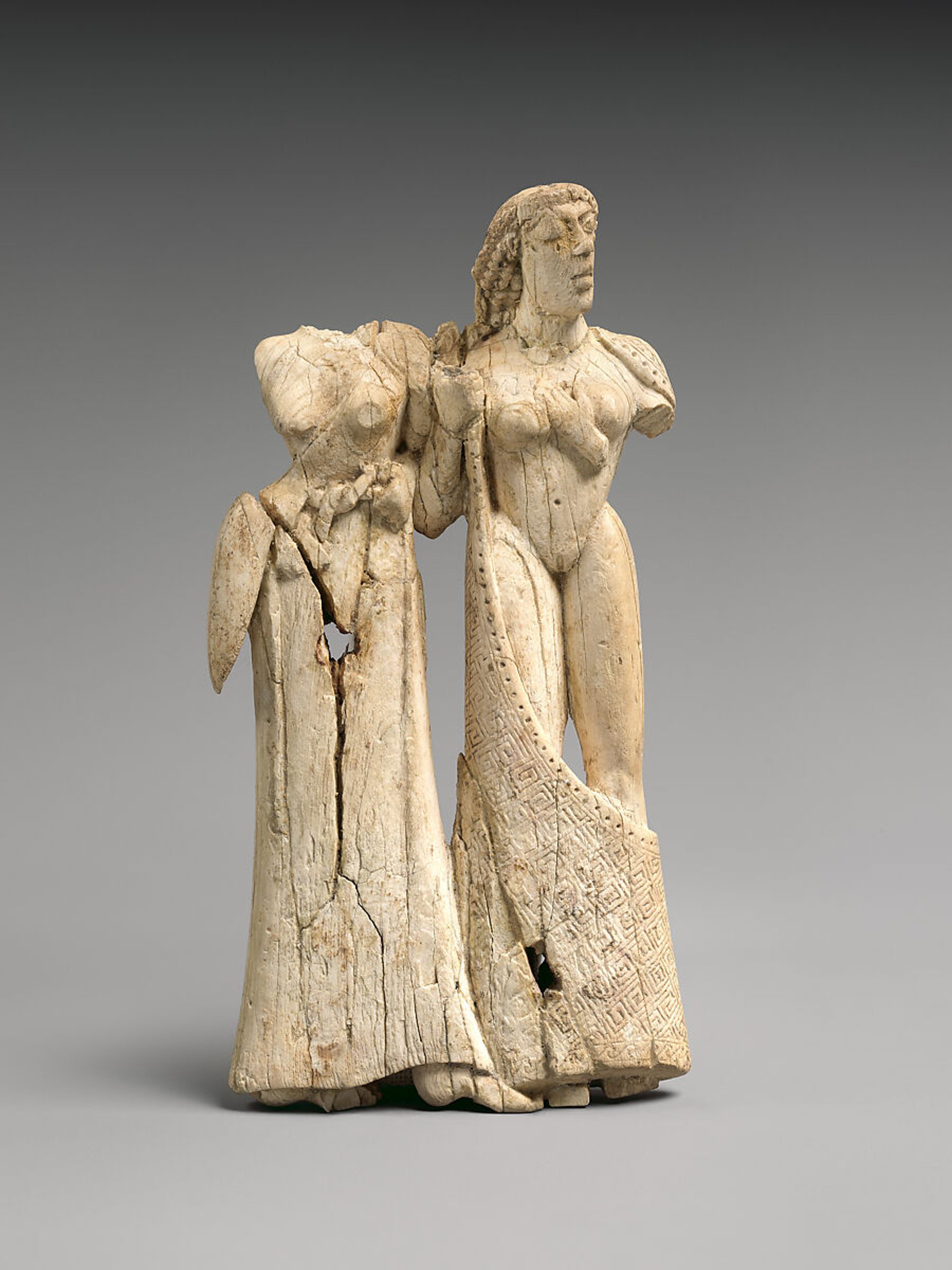
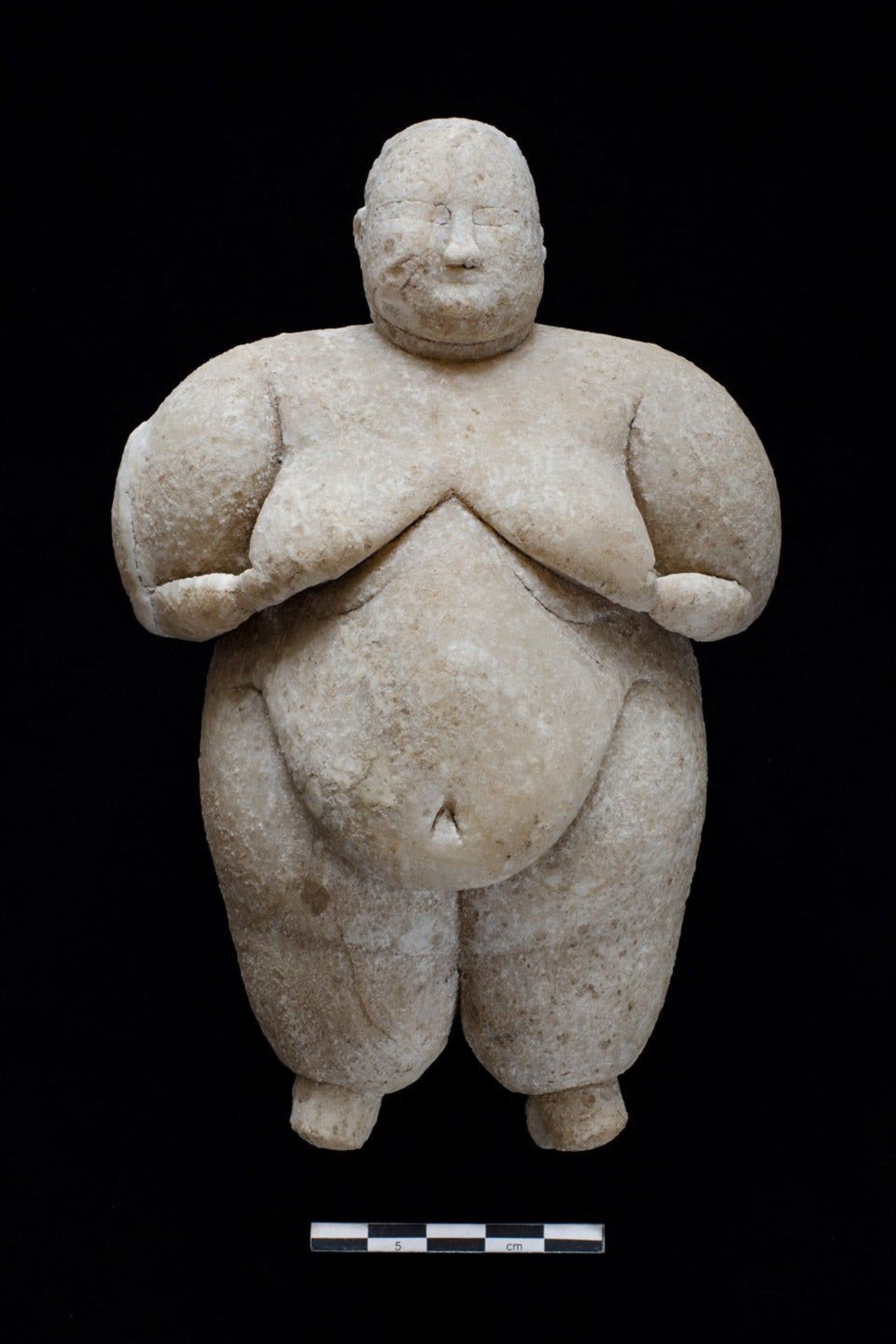
Archaeological evidence makes one thing unmistakably clear: female figures dominate early human art.
From prehistoric Venus figurines to goddess statues, temple carvings, murals, and ritual objects, the female form appears again and again. These were not casual decorations. They were expressions of awe.
The creators were not merely depicting women—they were externalizing their inner experience of femininity. These artifacts were projections of psychological, emotional, and existential fascination.
The mystery, once again, was not the woman herself—but what she awakened in the observer.
Conclusion: Symbol, Subject, and the Unfinished Reckoning
Women were reduced to symbols not because they were lesser—but because they were too significant to be understood directly by the frameworks of their time. Symbolism became a way to contain what could not be fully integrated.
The task of the modern world is not to erase symbolism, but to return subjecthood—to allow women to exist beyond representation, beyond archetype, beyond projection.
History documented the feminine as symbol.
The present must learn to encounter it as presence.