How We Interior Decorate Our Pain
Pain, much like a house we didn’t plan to live in, still asks to be arranged. We rarely leave it bare. Instead, we furnish it with habits, distractions, meanings, and small comforts—sometimes unconsciously. One of the first ways we do this is by going out for shopping, or simply buying something impulsively. The object itself may not matter; what matters is the act. Once it is there, we feel compelled to keep it, to justify it, to make something good out of it.
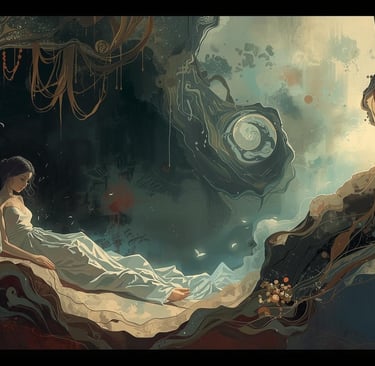
How We Interior Decorate Our Pain
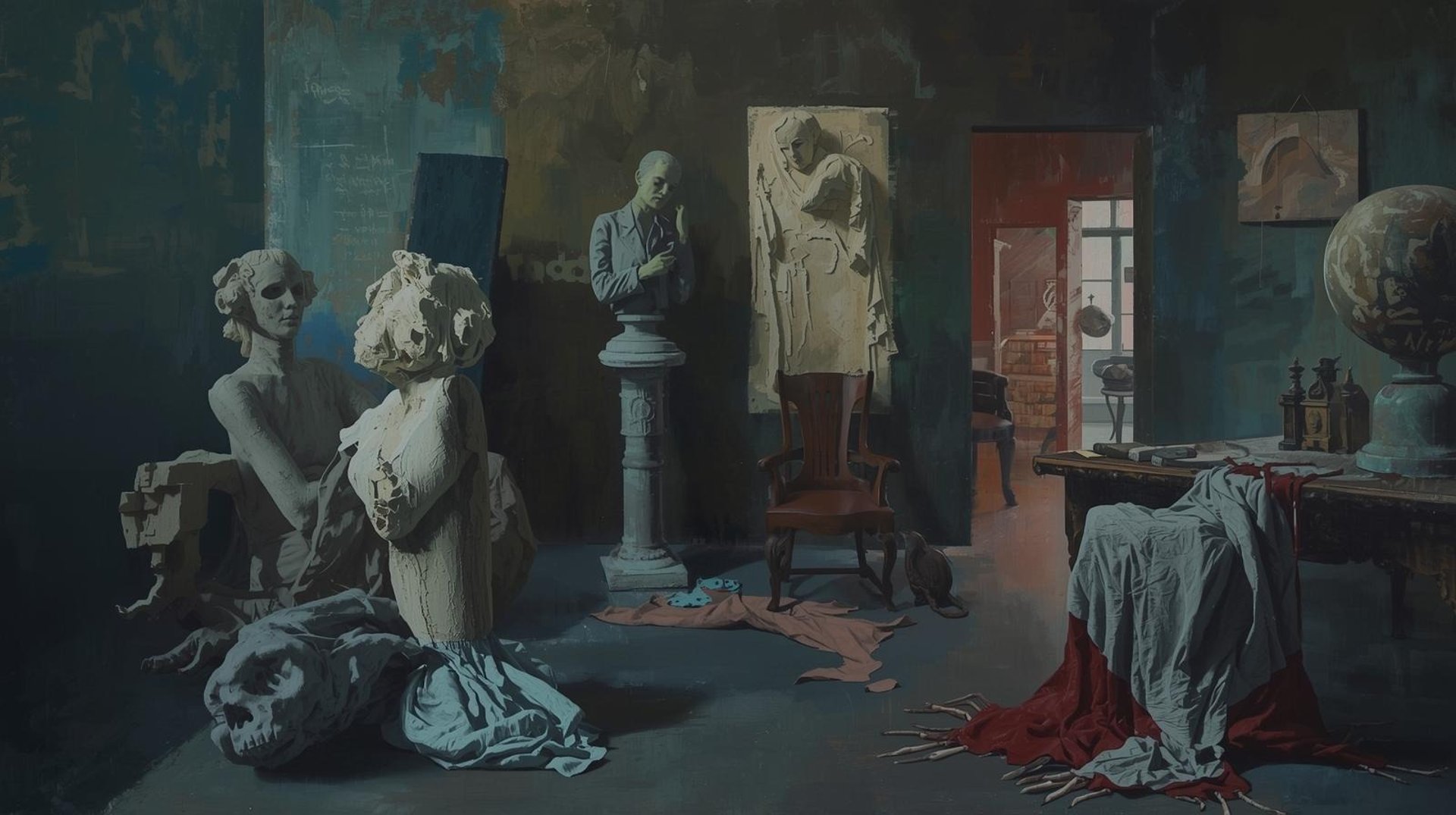
Pain, much like a house we didn’t plan to live in, still asks to be arranged. We rarely leave it bare. Instead, we furnish it with habits, distractions, meanings, and small comforts—sometimes unconsciously. One of the first ways we do this is by going out for shopping, or simply buying something impulsively. The object itself may not matter; what matters is the act. Once it is there, we feel compelled to keep it, to justify it, to make something good out of it. Pain works similarly. Once it arrives, we try to decorate around it rather than throw it out.
In many ways, pain behaves like matter in science—it doesn’t disappear; it transforms. We try to make the best use of it. This transformation doesn’t always look dramatic. Sometimes it appears as productivity, sometimes as discipline, sometimes as emotional distance. This can resemble a trauma response, but not always in a triggering or explosive way. Sometimes it shows up quietly—as adaptation.
In healthier moments, pain leads to a re-alignment of boundaries, not in a reactive sense, but in a recalibrated one. You don’t slam doors; you simply stop leaving them open. This isn’t fight-or-flight—it’s redesign. You move furniture so that nothing sharp sits too close to the heart.
There is also a subtle astrological choreography at play here—Venus active, Mars watching from the corner. Venus seeks beauty, softness, harmony. Mars stays alert, protective, cautious. We soften pain with aesthetics, pleasure, or meaning, while keeping one eye on defense. This balance helps us survive without becoming numb.
Often, we compensate one pain with another joy. A small pleasure to cool a larger burn. A meal, a laugh, a purchase, a moment of validation. These substitutions don’t erase pain, but they can temporarily redistribute it—like moving weight from one shoulder to another so you can keep walking.
Yet, not all decoration is helpful. Sometimes we create limiting ideas, concepts, beliefs, and habits around pain—rules about who we are because of it, what we deserve, what is possible now. These ideas become permanent fixtures, even when the pain itself has shifted.
We also install hooks—mental and emotional placeholders—for uncomfortable situations. Patterns we return to automatically: humor instead of honesty, detachment instead of vulnerability, busyness instead of feeling. These hooks help us hang discomfort neatly rather than letting it spill across the floor.
There are, in truth, countless ways of dealing with heavy emotional material. Some are gentle, some are clever, some are harmful, some are necessary for survival at a given time. Not every coping mechanism is meant to last forever, but many serve a purpose when the structure is still fragile.
The real turning point comes when the goal shifts from decoration to peace and movement. Pain doesn’t need to be glorified, endlessly reasoned, or made sacred through suffering. Understanding why it occurred can be helpful—but living inside that explanation forever becomes another kind of confinement.
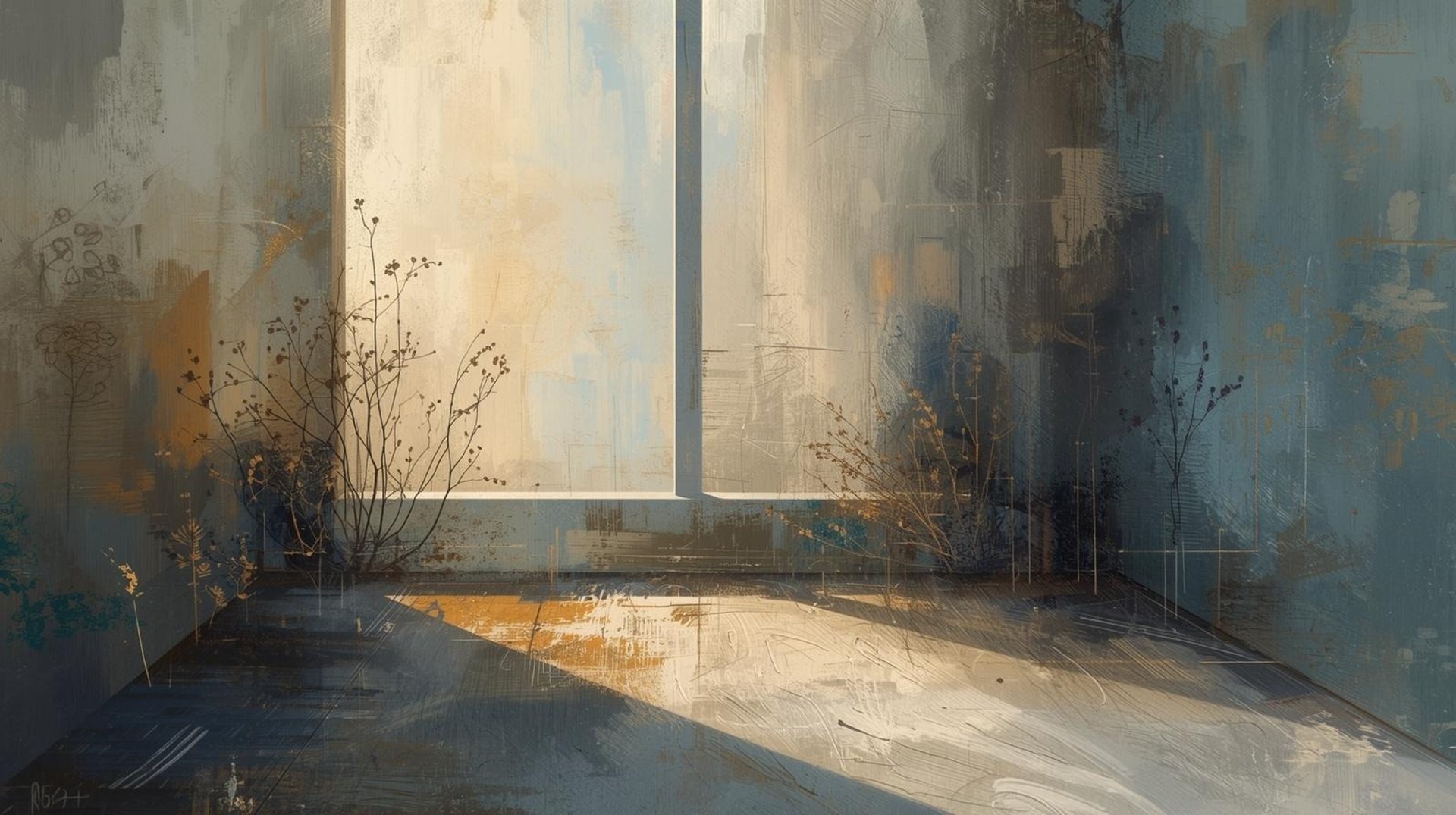
Interior decorating pain is human. Staying stuck in it is optional. At some point, the room must be lived through, not preserved. The furniture can stay—but the windows need to open.