

Mystery and Projection: The Enigma Is Not Her — It Is the Man’s Projection
The mystery surrounding women has long been framed as something inherent to the feminine—an enigma lodged in her nature, her moods, her desires. Yet, when we examine this mystery carefully, a different truth emerges: the enigma is often not her at all. It is the projection placed upon her, most frequently by the masculine psyche.
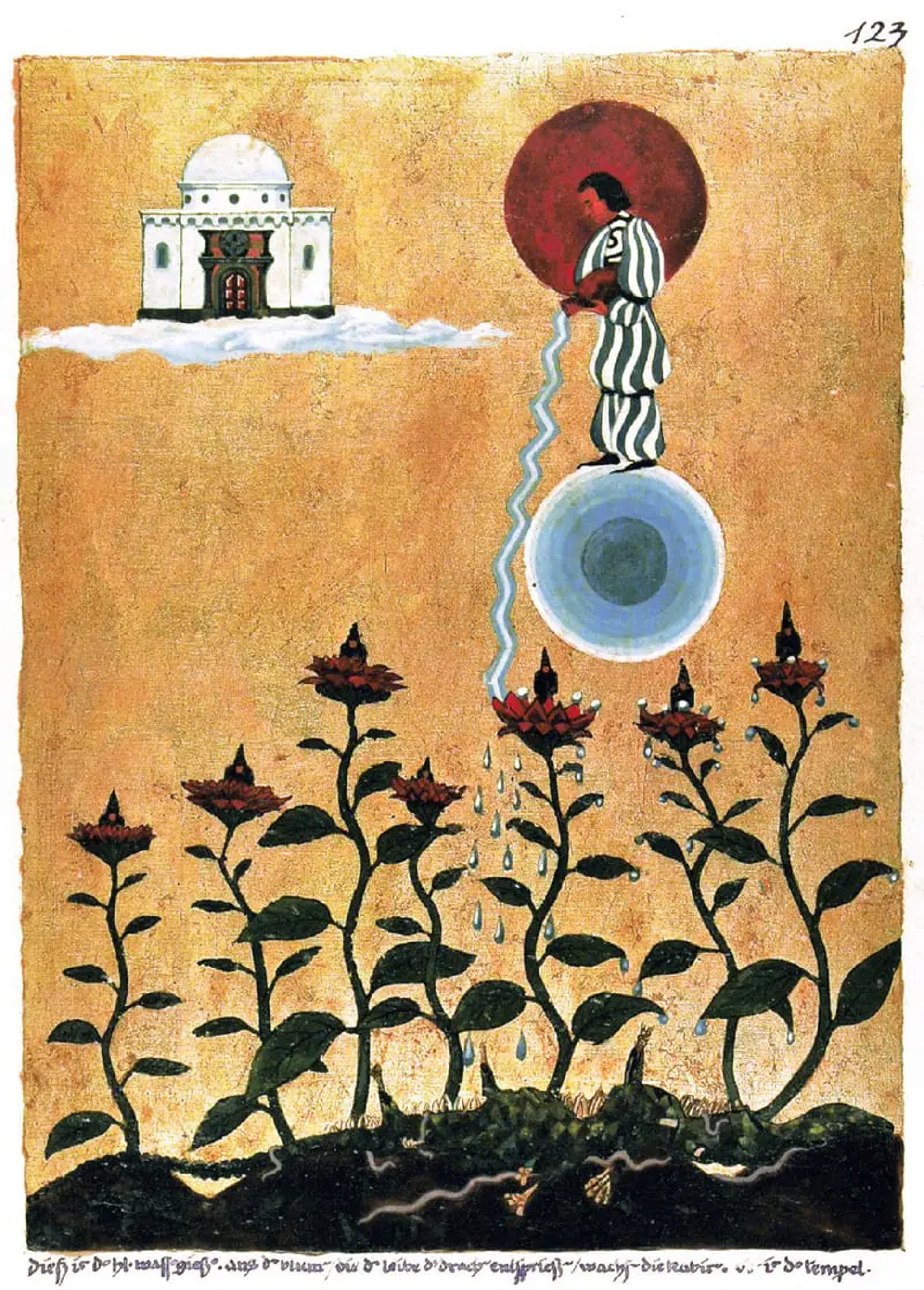


Mystery and Projection: The Enigma Is Not Her — It Is the Man’s Projection
The mystery surrounding women has long been framed as something inherent to the feminine—an enigma lodged in her nature, her moods, her desires. Yet, when we examine this mystery carefully, a different truth emerges: the enigma is often not her at all. It is the projection placed upon her, most frequently by the masculine psyche. What appears as mystery is, in many cases, unrecognized inner material seeking an external form.
To understand this, we must revisit feminine archetypes—not as fixed identities women live inside, but as symbolic structures that arise from the unconscious and are activated within relational space.
Archetypes: Maps, Not Cages
Feminine archetypes—such as the Maiden, Mother, Muse, Lover, or Child—were historically developed to help articulate patterns within the unconscious mind. In psychology, archetypes are symbolic blueprints, not diagnoses. They describe tendencies of energy, perception, and behavior that may surface at different stages of life.
A critical correction must be made here:
archetypes are not static personalities. They are dynamic, evolving expressions that shift with age, experience, environment, and self-awareness. Treating an archetype as a lifelong label is both psychologically inaccurate and developmentally harmful.
The Eternal Girl / Child Archetype
Among the most misunderstood archetypes is the Child—sometimes expressed as the Eternal Girl. When unintegrated, this archetype may manifest as emotional immaturity, avoidance of responsibility, or dependency. One of its most visible personas in modern culture is what is often called “princess syndrome.”
This persona is characterized by:
A belief in one’s inherent purity or specialness
Expectation of rescue, protection, or unconditional caretaking
Minimal perceived need for reciprocity or accountability
Reliance on charm, innocence, or vulnerability as social currency
Psychological research associates such patterns with over-sheltering, inconsistent attachment, or early trauma that interrupts healthy autonomy development. These factors can delay emotional individuation—but they do not freeze a person permanently in that state.
Human beings evolve.
Why the Persona Does Not Remain Forever
Developmental psychology is clear on this point: personality and identity are fluid across the lifespan. Cognitive, emotional, and moral capacities continue to mature through experience, reflection, and exposure to diverse environments.
Factors influencing this evolution include:
Social and cultural context
Life experiences and adversity
Perspective shifts and belief systems
Emotional literacy and self-awareness
Spiritual or existential frameworks
Thus, while a person may express an archetypal persona at one phase of life, it does not define their destiny. Growth is not only possible—it is natural.
Projection: Where the Mystery Is Born
Projection occurs when unconscious inner content is perceived as belonging to someone else. In relational psychology, men often project feminine archetypes—especially the Child, Muse, or Lover—onto women, interpreting them as mysterious, enchanting, fragile, or salvable.
This projection is not deliberate deception; it is unconscious meaning-making.
What the man perceives as “her essence” is often:
His unmet emotional needs
His unresolved inner child
His longing for innocence, purpose, or redemption
His internal anima (the feminine dimension of the psyche)
When the woman fails to embody this projection consistently—as no human can—the disillusionment begins. The “mystery” collapses, revealing that it was never hers to hold.
Beyond the Psychological: The Spiritual Dimension (Belief-Based)
Many spiritual traditions propose that the soul is the core organizing principle of existence—an energetic, non-binary essence that precedes physical life. Within these belief systems, reincarnation and karma describe how tendencies, lessons, and unresolved patterns may carry forward across lifetimes.
It is important to clarify:
These concepts are spiritual and philosophical frameworks, not empirically proven psychological facts. However, they function symbolically to explain why certain patterns feel deeply familiar, intense, or recurring across generations.
In this view:
The soul is not gendered; it is energetic
Masculine and feminine are expressions, not identities
Patterns may repeat until consciously integrated
Projection intensifies when awareness is absent
Whether interpreted metaphorically or spiritually, the insight remains consistent: unexamined inner material seeks expression outwardly.
Role vs. Essence
There is a vital distinction between:
The role one is meant to play (inner calling, temperament, soul alignment)
The role one is expected to play (cultural, relational, or generational scripts)
These exist on different planes—much like planets sharing an axis yet moving through distinct orbits. Conflict arises when expectation overrides essence, or when projection replaces perception.
Channeling Is the Deciding Factor
All archetypal energy—masculine or feminine—requires conscious channeling. When distorted, even well-intentioned energy leads to imbalance. Good intent alone is not enough; awareness determines outcome.
Psychology and spiritual philosophy converge on this point:
Suppressed energy manifests destructively
Projected energy creates illusion
Integrated energy leads to maturity
The soul, whether understood symbolically or spiritually, carries continuity. Actions—deeds—leave impressions. Growth occurs when those impressions are met with awareness rather than repetition.
Conclusion: The Mystery Dissolves With Understanding
The feminine is not inherently mysterious. The masculine is not inherently projecting. The confusion arises when internal archetypes remain unconscious and are externalized onto others.
When the source is understood, the product becomes clear.
This cycle—projection, encounter, disillusionment, growth—is not a failure. It is a lifelong developmental process. One that continues until inner recognition replaces outer fascination.
The enigma was never her.
It was the unseen part of the self asking to be known.