
Thin Skin, Heavy Armor: Understanding Men, Emotional Reactivity, and Suppression
The phrase “thin skin” is often used casually, sometimes mockingly, to describe someone who gets affected easily. When applied to men, it appears counterintuitive because masculinity is culturally associated with toughness, authority, and emotional control. Yet, when we look closely at emotional processing rather than emotional display, a paradox emerges: many men are deeply affected at the internal level but lack safe mechanisms to understand, regulate, or release what they feel.
Thin Skin, Heavy Armor: Understanding Men, Emotional Reactivity, and Suppression
The phrase “thin skin” is often used casually, sometimes mockingly, to describe someone who gets affected easily. When applied to men, it appears counterintuitive because masculinity is culturally associated with toughness, authority, and emotional control. Yet, when we look closely at emotional processing rather than emotional display, a paradox emerges: many men are deeply affected at the internal level but lack safe mechanisms to understand, regulate, or release what they feel. This mismatch is what often makes them appear reactive, defensive, or withdrawn rather than emotionally expressive.
Emotional Sensitivity Without Emotional Literacy
Men are not less emotional than women; they are often less trained in emotional literacy. From a young age, many boys are discouraged—subtly or overtly—from naming feelings like fear, shame, grief, or inadequacy. Instead of being guided toward self-regulation or self-understanding, they are pushed toward endurance. As a result, emotions are still felt, often intensely, but they remain unnamed, unprocessed, and unresolved.
This creates a condition where emotional sensitivity exists without emotional tools. When something touches an internal wound—criticism, rejection, loss of control, or perceived disrespect—the reaction is immediate. Not because the skin is weak, but because it is exposed without padding.
Reactivity as a Learned Survival Response
When emotions are repeatedly ignored or suppressed, the nervous system adapts. Suppression does not dissolve emotions; it stores them. Over time, this stored emotional energy seeks expression, often through reactivity. For men, this frequently appears as:
Irritability over small issues
Sudden anger or agitation
Emotional shutdown or withdrawal
Cutting off conversations or relationships
Over-defensiveness when questioned or confronted
Unlike women, who are often socially permitted to cry, vent, or seek support (even if later judged for it), men are taught that visibility of emotional pain equals weakness. So the system rewards emotional silence, not emotional health.
Vulnerability Feels Like Loss of Authority
When a man becomes aware that he is emotionally affected—especially deeply—it often triggers shame rather than relief. Awareness of emotional sensitivity clashes with the internalized belief that he must be stable, in control, and authoritative. Instead of vulnerability being experienced as honesty, it is interpreted as exposure. Instead of softness feeling human, it feels dangerous.
This is why many men react defensively when someone tries to help them emotionally. The help is not perceived as care; it is perceived as a threat to identity. Being “seen” emotionally can feel like being diminished.
Alone, Yet Still Suppressed
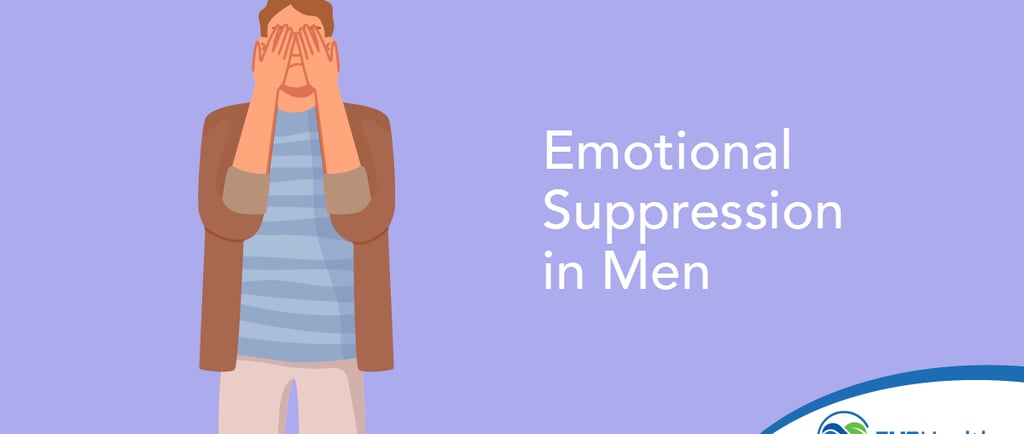
One of the most overlooked aspects of male emotional conditioning is that suppression continues even in solitude. Many men do not cry alone. They do not journal. They do not allow emotional release even when no one is watching. The internal censor remains active.
This creates a chronic state of emotional compression—pressure without release. Over time, this can manifest as numbness, agitation, addictions, hyper-independence, or complete emotional disengagement from relationships.
Boundaries That Become Walls
When suppressed emotions eventually cause relational conflict—arguments, misunderstandings, emotional outbursts—many men draw the wrong conclusion: “Talking creates problems.” Instead of learning healthier emotional expression, they learn avoidance.
So they build boundaries that are not protective but isolating:
Speaking only when necessary
Sharing facts, not feelings
Avoiding emotional conversations
Reducing intimacy rather than deepening it
If someone attempts to break through these walls with concern or confrontation, defensiveness appears—just as it does in women. The difference lies not in the feeling, but in the expression.
Women Collapse, Men Harden
When women suppress emotions long-term, the body often reacts through breakdown—crying spells, anxiety, emotional overwhelm, or psychosomatic symptoms. Society labels this as “hysterical,” reinforcing the stigma.
When men suppress emotions long-term, the psyche often reacts through hardening—aggression, detachment, silence, or emotional coldness. Society labels this as “strength,” even though it is equally a sign of internal distress.
Both are responses to the same root issue: unprocessed emotion. The outcomes differ because the social conditioning differs.
Thin Skin Is Not Weakness—It Is Unacknowledged Sensitivity
What is often called “thin skin” in men is not fragility; it is sensitivity without permission. It is emotional depth without language. It is vulnerability trained to wear armor instead of learning to breathe.
True emotional authority does not come from suppression. It comes from regulation, awareness, and the ability to stay present with one’s internal world without collapsing or attacking. Until systems allow men to develop this capacity safely, thin skin will continue to masquerade as aggression, silence, or detachment.
And beneath it all, the emotions remain—waiting not to be conquered, but understood.