
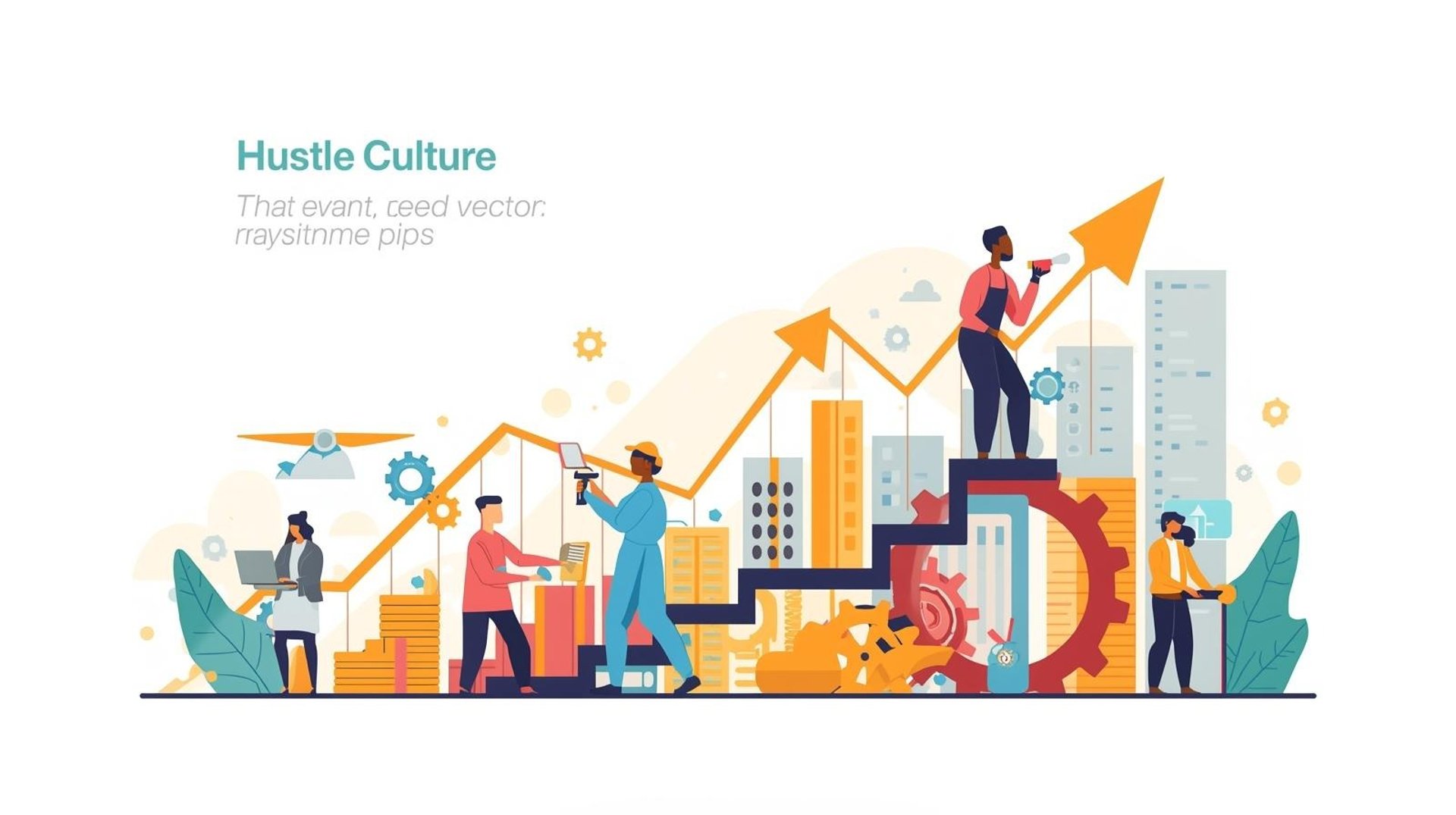
Why Do We Worship Hustle Culture?
Hustle culture did not appear out of nowhere; it grew quietly from a deeply human impulse—the need to say “I have it all too.” What once began as personal ambition has slowly taken the shape of a collective ritual, almost a cult, where productivity becomes proof of worth. In a world that constantly displays success, visibility, and speed, hustling turns into a way of asserting presence:

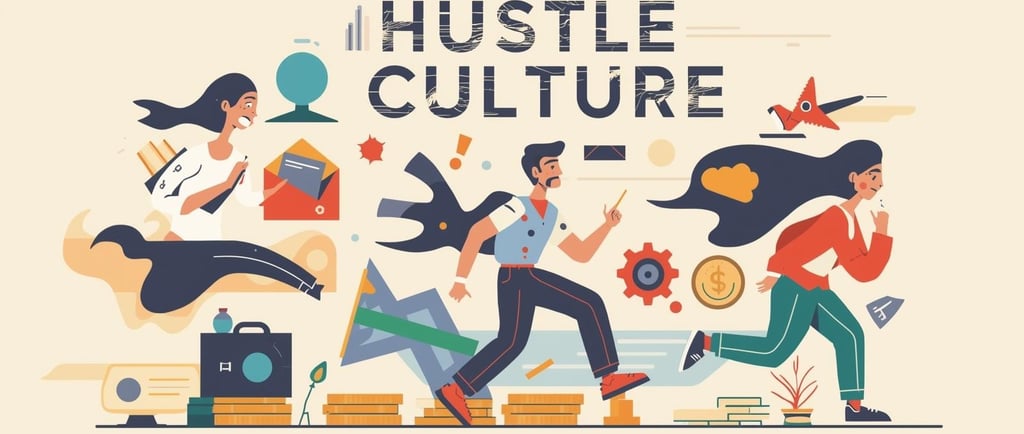
Why Do We Worship Hustle Culture?
Hustle culture did not appear out of nowhere; it grew quietly from a deeply human impulse—the need to say “I have it all too.” What once began as personal ambition has slowly taken the shape of a collective ritual, almost a cult, where productivity becomes proof of worth. In a world that constantly displays success, visibility, and speed, hustling turns into a way of asserting presence: I exist because I achieve. This shared performance reinforces itself, making rest feel suspicious and stillness feel undeserved.
Over centuries, humans have survived and progressed through achievement. From hunting and building shelter to creating art, empires, and industries, achievement was tied to survival and continuity. To achieve meant to secure food, safety, belonging, and later—status and recognition. In modern times, this instinct has not disappeared; it has simply changed form. Achieving now looks like making it in life—claiming wings, rising above limitations, and proving one’s place in an increasingly competitive world.
The birth of hustle culture is rooted in the idea of adequate living. At its core, it was never about excess—it was about sufficiency. Hustling originally meant working toward stability, dignity, and a life that felt good enough. In simple words, it was about striving for a sufficient and meaningful life. Biologically, this striving is reinforced by hormones like dopamine, which reward effort and progress. The sense of achievement feels good because the body registers it as survival and growth.
However, what nourishes one person can deplete another. For some, hustle culture transforms into a cycle of constant demand—produce more, show more, become more, stay relevant. The pressure to maintain interest, visibility, and output can quietly turn harmful, especially when rest is framed as laziness and boundaries as weakness. When individuals get trapped in this cycle, the mind begins to carry the weight of perpetual urgency.
This exhaustion does not always announce itself loudly. It surfaces subtly—through isolation, irritability, chronic fatigue, emotional numbness, or a loss of joy in the very work that once felt meaningful. The irony is that hustle, meant to create a better life, can sometimes erode the ability to live it.
Hustle culture itself is not the enemy; striving is a natural part of being human. The real question is what hustling means to you as an individual. This is not something researchers can fully measure or define, because it requires an internal audit. Self-study becomes essential—understanding your limits, your motivations, and your definitions of success. If you are part of this hustling world, the deeper work is deciding how you want to exist within it: not as a product of pressure, but as a conscious participant shaping how you are seen, how you work, and how you live.
In the end, the most meaningful hustle may not be about doing more—but about knowing why you are doing it at all.